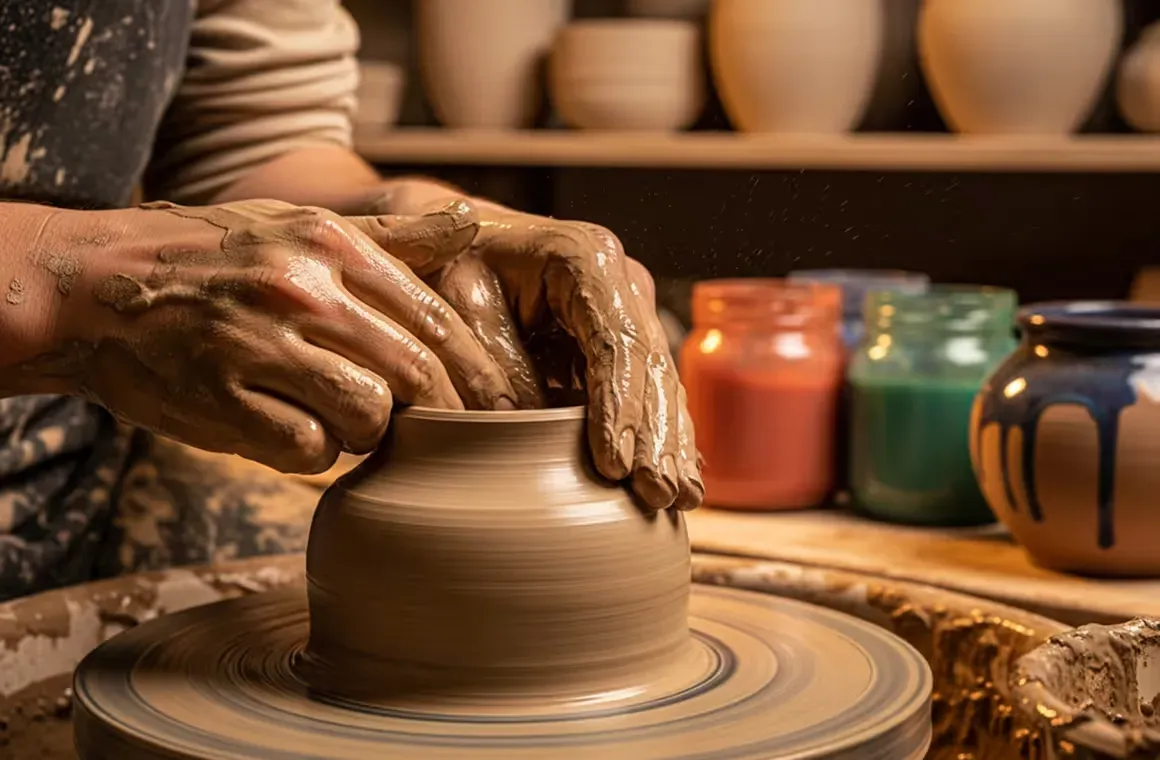
Clay is a mineral that has been weathered small enough to slide. Add water and the flat particles slip over one another, which is why it throws; let the water go and they lock, which is why it holds a shape. None of that is permanent. A dried pot dropped in a bucket is mud again within the hour.
The first change: water leaves for good
The kiln goes up slowly at first, and until around 200°C nothing interesting is happening — the last of the physical water is simply steaming off. The change that matters starts near 500°C, when water that is chemically bound inside the clay molecule itself is driven out.
That is the point of no return. The mineral that comes out the other side is not the mineral that went in, and no amount of water will make it plastic again.
The second change: the clay begins to melt
Past about 1100°C some of the minerals in the body start to soften and flow into the gaps between the particles, gluing them together as they cool. This is vitrification, and it is what turns a porous biscuit into something that will hold water and ring when you tap it.
How far you take it is a decision. Stop early and the pot is lighter and more forgiving but will seep. Go too far and it slumps in the kiln, or comes out so dense it cracks on the first hot drink.
Why the second firing exists
Most work here is fired twice: once to around 1000°C to make it hard enough to handle and porous enough to drink glaze, and once to 1260°C with the glaze on. The first firing is the safety net. The second is where the color happens, and where the losses happen too.
Roughly one piece in eight does not survive the glaze firing. That is a normal rate, and it is folded into what things cost.